Dating again after divorce or widowhood: how matchmaking can help
By Clara Kowalski · Updated 2026-09-02

This article offers general guidance on the practical and emotional side of dating again and is not a substitute for professional counseling if grief or major life transitions are affecting you significantly.
Starting to date again after a divorce or the death of a spouse is a different experience than dating for the first time. The practical mechanics, updated photos, a profile that reflects who you are now, are the easy part. The harder part is usually emotional: figuring out what you actually want this time, and whether you’re really ready.
What’s different this time around
Clients coming out of a long marriage or a loss often need more upfront conversation than someone dating for the first time. What you wanted at 25 isn’t necessarily what you want now, and a rushed process that skips this step tends to produce mismatched introductions. Discretion also tends to matter more here, particularly if a divorce is recent or still in process, or if your job puts you in a public-facing role where privacy is a real concern.
Grief and divorce aren’t the same experience, even though people sometimes lump them together. Someone recently widowed is often working through something different than someone who’s been divorced for a few years and feels ready to move forward. A matchmaker who treats every client the same regardless of circumstance is missing something important.
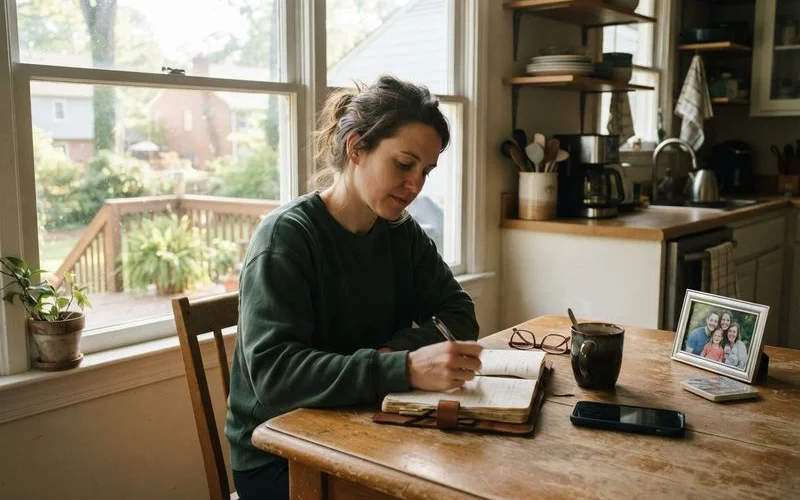
Where matchmaking fits in
A matchmaker’s core value here is taking some of the practical weight off your shoulders at a moment when you may not have the bandwidth for the sourcing and screening dating apps require. Many clients in this position start with a few coaching sessions before any introductions happen, using that time to rebuild confidence, clarify what’s actually changed about what they want, and get comfortable talking about themselves again in a dating context.
| Where you are | What tends to help |
|---|---|
| Not sure you’re ready yet | A conversation or coaching session, no introductions yet |
| Ready but out of practice | Profile help and light coaching before matches begin |
| Ready and clear on what you want | Introductions can start relatively quickly |
| Concerned about privacy | Ask directly how your information is shared before signing anything |
Setting your own pace
There’s no universal right time to start again, whatever well-meaning friends or family might suggest. What matters more is being honest with yourself, and with a matchmaker if you choose to work with one, about where you actually are. A firm that respects that pace, rather than pushing you toward introductions before you’re ready, is one worth trusting with something this personal.
Talking to kids or family about dating again
If you have children, even adult ones, or a wider family circle with opinions about your dating life, it’s worth thinking through how and when you’ll tell them before you’re already several dates into something. Some people prefer to wait until a relationship feels serious; others tell close family from the start. Neither approach is wrong. What tends to cause friction is family finding out indirectly rather than from you, so a brief, low-pressure conversation on your own terms usually goes over better than letting it come up by accident. If your adult children want to get more directly involved, like helping you find a matchmaker, our guide on helping a family member find a matchmaker covers how to support without overstepping.
What a first introduction might actually feel like
It’s common to feel some combination of excitement and guilt, or excitement and anxiety, on a first date after a divorce or loss, sometimes within the same conversation. That mix doesn’t mean something is wrong or that you’re not ready. A matchmaker who has worked with clients in similar situations before can normalize this for you ahead of time, which itself takes some of the pressure off the actual date.
If grief is the dominant feeling rather than readiness to date, it’s worth talking to a counselor alongside, or instead of, any dating support. When you do feel ready to explore matchmaking, our ranking method explains how we score Atlanta providers on transparency and client care, and you can browse the full directory from the Matchmaking Atlanta home page.
Questions people ask
- How soon after a divorce or loss should I start dating again?
- There's no fixed timeline, and a good matchmaker won't push one on you. Most reputable firms will meet with you whenever you're ready and let you set the pace, including starting with coaching before any introductions.
- Will a matchmaker keep the fact that I'm recently divorced or widowed private?
- Reputable firms treat client information as confidential by default. Ask specifically how your profile is shared with potential matches and whether you can review it before it's used, especially if discretion matters to you.
- Do I need coaching first, or can I go straight to introductions?
- Either is reasonable. Some people want coaching to rebuild confidence before meeting anyone; others are ready to jump straight into introductions. A good matchmaker will ask which you want during intake rather than assuming.
- Is it normal to feel guilty about dating again after losing a spouse?
- It's a common feeling, and not something a matchmaker is equipped to work through with you clinically. If it's weighing heavily, a grief counselor or therapist alongside any dating support can help more than dating logistics alone.